

Clogged drains?
Before you reach for a bottle of Drano or other drain cleaning liquid, wait a second!
These products promise a lot about dissolving clogs and all your problems flowing away down the clear pipes. But that’s not always the case. Drain cleaners can create new issues in your plumbing system and in the wider environment.
Let’s take a look at some of the main drawbacks to commercial drain cleaning liquids and what the alternatives are.
What are the problems with drain cleaners like Drano?
Liquid plumbing solutions like Drano can cause more harm than good. They sometimes help to clear small plumbing blockages (though there’s no guarantee) but they can also cause the following types of damage:
- Commercial drain cleaners contain very harsh chemicals that can corrode your pipes and lead to damage over time.
- The primary active ingredients in these products are sodium hypochlorite (bleach) and sodium hydroxide (caustic soda/lye), which can harm piping if not used properly.
- The liquids can create heat and react with other substances in your pipes, such as soap scum or grease, leading to further problems.
- Sometimes, drain cleaners can worsen the state of clogged pipes or lead to leaks and water damage in the worst-case scenarios.
Besides the potential damage, drain cleaning liquids have little effect on larger blockages caused by serious problems, such as a tree root or a broken pipe.
With a drain that is completely backed up with standing water, adding Drano is dangerous because it creates a caustic pool that must be “splashed through” to fix the issue. Call a professional plumber to troubleshoot and clear the underlying issue.
How liquid drain cleaners can affect your plumbing
Not all drain cleaners will corrode pipes if used according to instructions. Many contain anti-corrosive substances that help to reduce the risk.
However, not all homeowners follow instructions. Regularly pouring the wrong drain cleaner down pipes can lead to corrosion or water damage from pinhole leaks in metal pipes, or softening or sagging PVC pipes.
The caustic nature of the chemicals can also damage other fixtures in your home, such as showers and basins.
How drain cleaning liquids damage the environment
Drain cleaners like Drano also cause a toll on the environment, particularly with aquatic life and soil pH levels, unless handled with great care.
Municipal treatment plants are designed to handle many household chemicals but the sheer volume and concentration of these products can still cause the following types of issues:
Toxicity to aquatic life from bleach entering the waterways and reacting with other organic materials to form substances that are toxic to fish and aquatic microorganisms.
Surfactants that help the liquid penetrate grease don’t break down easily and can coat the gills of fish, causing breathing difficulties.
The cleaners are extremely alkaline (high pH), which can kill beneficial bacteria in the area and harm local wildlife.
In rural areas, the liquids can penetrate the septic system and harm the live bacteria that break down waste.
NOTE: If you do use a commercial drain cleaner, never pour leftover liquid down a storm drain or it will end up in the waterways.
Alternatives to liquid drain cleaners
Many alternatives to drain cleaning liquids are less harmful to both your plumbing system and the environment.
Next time you have a clogged drain in your home, consider trying one of these DIY solutions:
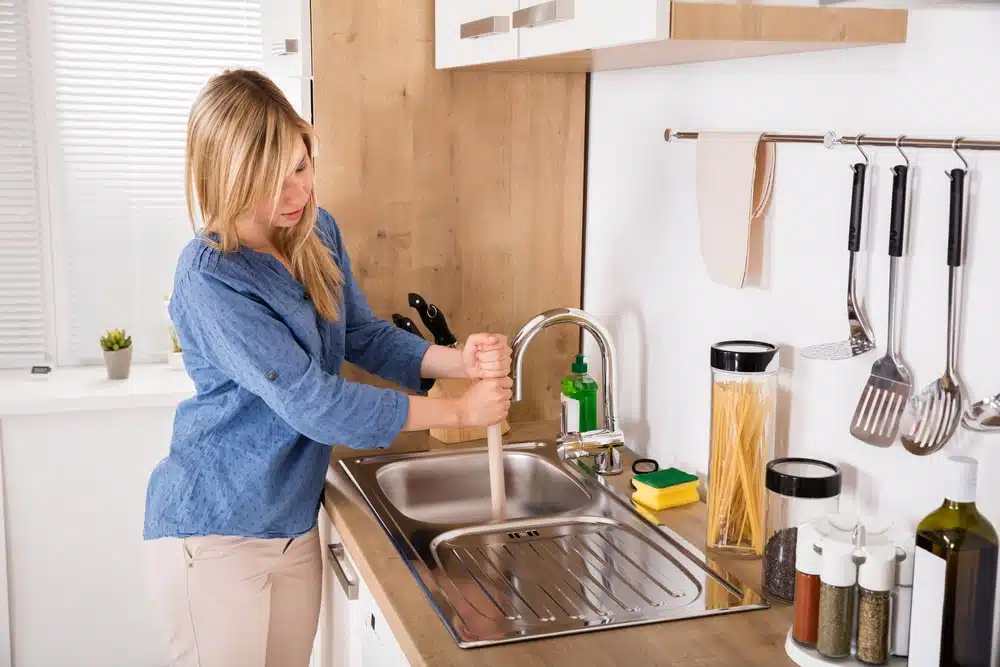
A plunger: This cheap, easy-to-use device can effectively clear small blockages in toilets and sinks, without damaging your plumbing or the environment.
A plumbing snake: This hand-held tool is inserted into pipes and can effectively remove larger clogs than plungers, another simple, manual solution with zero chemical run-off.
Natural liquids: Readily available household substances like boiling water and dish soap can help dissolve minor grease clogs safely and without damaging pipes or risking environmental harm. Despite what you may read, the “fizzing” action of baking soda/vinegar is mainly for deodorizing, not heavy-duty clearing.
Enzymatic cleaners: These liquids use natural bacteria and enzymes to “eat” organic clogs. They are slower (often requiring an overnight soak) but are safe for septic systems and the environment.
How do professional plumbers unblock clogged drains?
If the clogged drain doesn’t clear with DIY methods, it’s time to “up the ante”.
Professional drain cleaning services fix clogged drains or slow drains without ever using substances like Drano. Instead, we use specialist equipment and our experience to diagnose and resolve the issue.
For challenging issues, this is the standard process:
Video inspection: Special equipment with a video camera attached to a long fibre-optic cable is inserted into the clogged drain. This identifies the nature of the blockage (or broken pipe) so the plumber can decide what to do next.
Clear the blockage with a drain auger: A motorized drain auger is more heavy-duty than a plumbing snake, with a long, flexible metal coil that works like a corkscrew. We insert this into the drain until it hits the clog. The motor is then activated to penetrate to the end of the clog, breaking it up and pushing it on through, or we pull it out with the auger.
Use a hydro-jetter if necessary: For some stubborn clogs, a hydro-jetter will be used to comprehensively clean the drains and remove any traces of grease, soap scum, etc.
If you have already used a chemical cleaner and it didn’t work, please inform your plumber as soon as they arrive. These chemicals can cause skin and eye burns if they splash on the technician while they are working on the pipes.
Clogged drain in Calgary? Get the help you need
Professional drain cleaning gives you the peace of mind that your clogged drain will be cleared safely and without harming your family, your plumbing, or the local environment.
If you live in Calgary, our licensed professional plumbers can unclog your drain. Call Pete the Plumber at (403) 257-1766 to arrange a visit.